Reviewed · MAUI TOURS
Honey Bee Adventure at the Maui Honey Bee Sanctuary
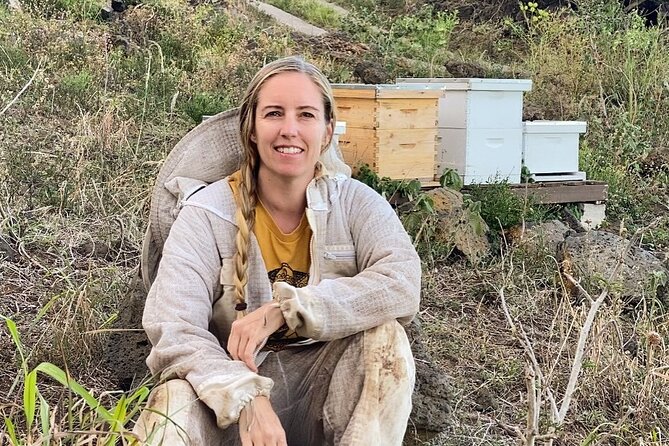
The most memorable part of the Maui Honey Bee Sanctuary tour is getting close to a live hive in protective gear, then seeing how the bees’ work turns into honey. Beekeeper and tour operator Erica leads the experience, which combines a short lesson with hands-on time and a tasting.
I like the small group, capped at eight, because it gives you room to follow along and ask questions. I also like that the tour pairs its bee lesson with honey from Maui hives and local beekeepers, so the tasting connects the subject to the island’s farming community.
One consideration: the sanctuary is in Kula, and the drive can be winding as well as scenic. The tour is not recommended for anyone with a severe bee sting allergy, and you’ll need to wear closed-toe shoes with long, light-colored socks.
At a glance
- Live hive visit: Put on a bee suit and gloves, then get a close look at the hive and its frames.
- Led by beekeeper Erica: Learn about bees, pollination, honey production, and the role bees play in the wider environment.
- Honey tasting: Sample honey from the sanctuary’s hives and Maui’s local beekeeping community.
- Kula views: The apiary has panoramic views across Maui, and the drive there can be scenic and twisty.
- Small group size: The tour has a maximum of eight participants, making it a more personal alternative to a large group activity.
A 90-minute visit from lesson to hive
The tour begins at 10:30 a.m. at 16-655 Piilani Highway in Kula. Plan for about an hour and a half at the sanctuary, with the activity ending back at the meeting point. The format moves from an educational presentation to an encounter with a live hive, followed by honey tasting and time at the farm stand.
That order makes sense. You first get a bit of context about bees and beekeeping, then see the hive with a better idea of what you’re looking at. The hands-on part is the main event, but the talk helps it feel like more than a quick photo stop in protective clothing.
Erica’s mission is to explain the role honeybees play on the planet. She also harvests honey and makes products from hive materials, including beeswax candles, lotions, and lip balm. That working-farm angle gives the visit a practical focus: you hear about bees as part of local food production, not just as an abstract conservation topic.
More Maui tours:
- Maui Pineapple Farm Tour in Haliimaile
★ 5.0 · 2,855 reviews - Maui Eco-Raft Tour: Eye-Level Whale or Dolphin Watching – Lahaina
★ 5.0 · 2,482 reviews - Maui Snorkeling Adventure to Molokini and Turtle Town
★ 4.5 · 2,221 reviews
Getting suited up for a closer look
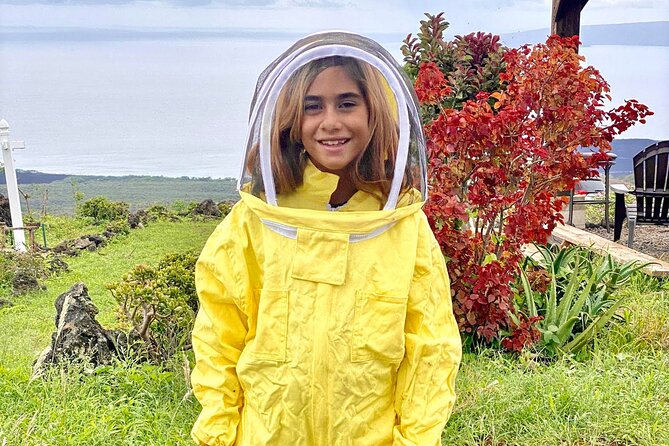
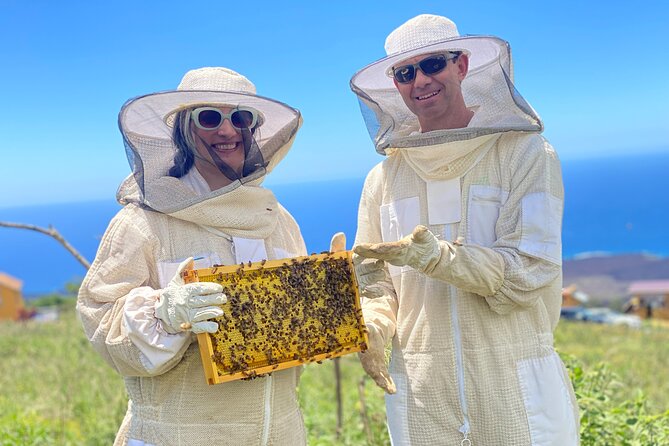
Bee suits and gloves are provided, so you don’t need to bring protective gear. You do need closed-toe shoes and long socks in white or another light color. Follow that advice closely and dress for the practical side of handling hive equipment rather than for a polished farm photo.
During the live-hive portion, the group gets close enough to see the bees and the parts of the hive. Participants have described putting on the suits, seeing the hive boxes opened, and holding frames from the hives. It’s an unusual chance to observe a working hive at close range, with a guide there to explain what’s happening.
This is also where the group limit matters. With no more than eight people, you’re less likely to be stuck watching from the back of a crowd. You can listen, look carefully, and ask questions. The tour is listed as suitable for all ages, and the family appeal is clear: the combination of a short lesson and a direct look at bees can hold children’s attention in a way a talk alone might not.
Still, close contact with a live hive is not for everyone. The activity is not recommended for people with severe bee sting allergies. If that applies to you or someone in your group, take the warning seriously and ask a medical professional before booking.
From pollination to honey on your spoon
The educational presentation covers pollination and honey-making. That context helps explain why bees matter beyond the jar: pollination is part of how many plants reproduce, while honey is one product of the hive that beekeepers can harvest.
The tour’s appeal is not that it promises a technical course in beekeeping. In about 90 minutes, you get an accessible introduction, a look inside a live hive, and a chance to connect the lesson to the honey you taste. If you’re curious about how a hive works, this is a more tangible way to learn than reading a label at a shop.
After the hive visit, you sample honey from the sanctuary’s own beehives and from the local Maui beekeeping community. The tasting gives you a chance to compare products from different sources, though the tour details do not specify the number of varieties or tasting portions. Think of it as a useful finish to the lesson rather than a formal tasting class.
The farm stand sells honey and other hive-based products. You may find beeswax candles, lotions, lip balm, and jewelry, as well as honey. That gives you a chance to support the sanctuary and local makers directly, but buying something is optional. The tour itself includes the tasting, not a promise of a particular product or purchase.
Kula’s views and the drive up
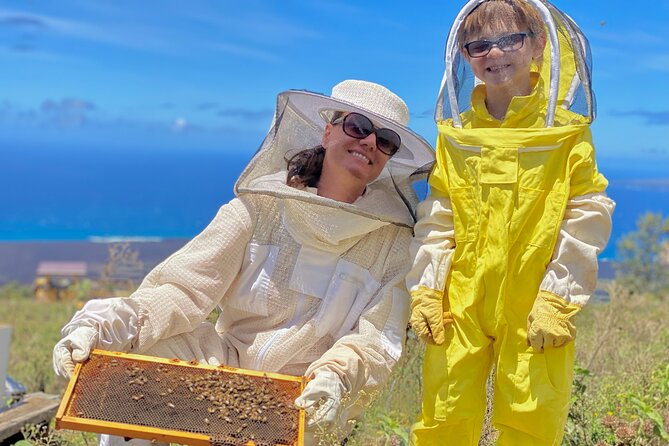
The apiary’s setting is part of the visit. From the farm, you can take in panoramic views of Maui, including views toward the water. The outlook makes the stop feel distinct from a strictly indoor lesson, and it gives you a reason to slow down before heading back down the road.
Getting there is part of the outing. The drive to the sanctuary has been described as scenic, with twists that can make it feel like a mini road trip. That is a plus if you enjoy winding Maui roads and open views. If you prefer direct, easy driving, allow extra time and don’t treat the address as a quick detour between other appointments.
The meeting point is on Piilani Highway in Kula, and the activity ends at the same place. The tour information does not include transportation from other parts of Maui, so arrange your own way to the start. Since the start time is fixed at 10:30 a.m., build in a cushion for the drive rather than arriving at the last minute.
Rather swap the beach for something else?
- Maui: Haleakala Sunrise Spectacular with Local Breakfast
★ 4.5 · 2,155 reviews - Maui Snorkeling Adventure From Ma’alaea Harbor to Molokini
★ 4.5 · 1,997 reviews - Maui: Turtle Town Snorkel with Photo and Video
★ 5.0 · 1,916 reviews - Road to Hana Adventure Maui Tour with Lunch
★ 5.0 · 1,832 reviews
What the price buys, and what it doesn’t
A past participant noted paying $79 per person in March 2023 and felt the experience did not justify that price. The current price is not specified here, so check it before booking. At any price, value depends on what you want: this is a small, guided educational activity with protective gear, a live-hive encounter, honey sampling, and a scenic farm setting. It is not a long tour or a broad sightseeing trip.
I’d consider it worthwhile if you’re genuinely curious about bees, want a hands-on activity for a family or small group, or enjoy meeting local producers. The live-hive access is the feature that makes the experience more than a presentation, and the small group helps the guide give each person attention. The view and tasting add to the visit, but they are not substitutes for the bee lesson.
If your main goal is simply to buy Maui honey, a farm stand alone would take less time. If you dislike insects, want a highly polished visitor center, or expect a full half-day outing, this may not be the right match. The occasional report of an uncertain welcome at the front stand also suggests a practical tip: when you arrive, confirm you’re at the right place and ask where the group should gather.
A good fit for curious families and bee fans
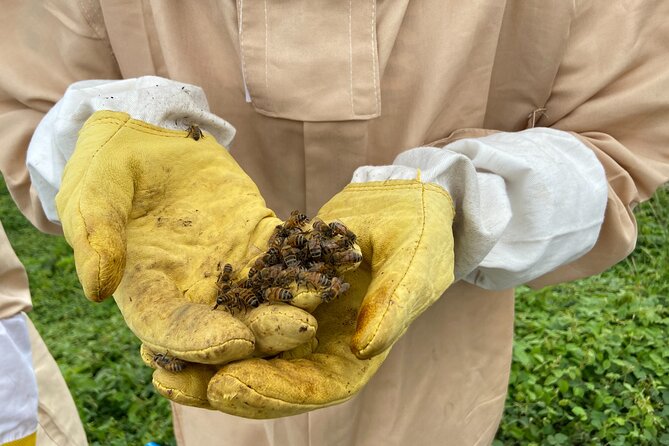
The activity is listed for people of all ages and suits individuals, couples, friends, honeymooners, families, and work groups. It can also be arranged as a team-building or corporate outing. The small group size makes it feel personal, while the subject gives everyone something concrete to discuss afterward.
For families, the draw is the chance to see hive frames and learn through direct observation. For adults, it’s an uncommon way to understand local beekeeping and pollination, with time to ask the person doing the work. Teachers may also find the format useful: it links a classroom subject to a working hive, though the tour is not described as a custom school program.
The experience is offered in English and uses a mobile ticket. Confirmation is provided at booking. It requires good weather and a minimum number of participants; if poor weather or a low turnout leads to cancellation, you’ll be offered another date or a full refund. You can cancel for a full refund up to 24 hours before the start time. Changes or cancellations made inside that 24-hour window are not accepted for a refund.
Should you book the Maui Honey Bee Sanctuary tour?
Book it if you want a compact, hands-on lesson about bees and are comfortable getting close to a live hive. Erica’s presentation, the small group, the hive inspection, and honey tasting make a well-rounded visit for curious adults and families. The views are a bonus, and the farm stand gives you a chance to take home local honey or a hive-based product.
Skip it if a severe bee sting allergy makes the visit unsafe, if you’re not interested in insects, or if you’re looking for a broad Maui sightseeing tour. For the best fit, treat it as a focused Kula farm visit, leave time for the winding drive, and arrive ready to learn rather than expecting a long list of attractions.
FAQ
How long is the Honey Bee Adventure?
The tour lasts about 90 minutes.
Where does the tour start?
It starts at 16-655 Piilani Highway in Kula, Hawaii. The activity ends back at the meeting point.
What time does the tour begin?
The listed start time is 10:30 a.m.
How many people can join?
The maximum group size is eight participants.
What should I wear?
Wear closed-toe shoes and long white or light-colored socks. Bee suits and gloves are provided.
Is the tour suitable for children?
The activity is listed as suitable for all ages.
Is the tour recommended for someone with a severe bee sting allergy?
No. It is not recommended for people with severe bee sting allergies.
What happens if the weather is poor or the tour is canceled?
The tour requires good weather and a minimum number of participants. If it is canceled for poor weather or because the minimum is not met, you’ll be offered another date or experience, or a full refund.
Just added around Maui
- Fun Mountain Bike riding on trails in Maui Hawaii!★ 5.0 · 11 reviews
- Maui’s Only Clear Bottom Kayak Rental (priced per tandem kayak)★ 4.0 · 12 reviews
- 3-Tank Dive Featuring the Molokini Crater★ 5.0 · 5 reviews
- “Origins” Multicultural Dance Spectacular★ 5.0 · 23 reviews
- Mermaid and Merman Photoshoots on Maui★ 5.0 · 4 reviews
- Maui Jewelry Making Class with Puka Shells and Pearls★ 5.0 · 7 reviews
- Instant Island Moments: photos and video same day delivery★ 5.0 · 9 reviews
- Famous Road to Hana Waterfalls, Black Sand Beach & Lunch★ 5.0 · 32 reviews
Maui Tours, compared.


Maui Eco-Raft Tour: Eye-Level Whale or Dolphin Watching – Lahaina
Read our review →
Maui Snorkeling Adventure to Molokini and Turtle Town
Read our review →
Haleakala Sunrise Spectacular with Local Breakfast
Read our review →
Maui Snorkeling Adventure From Ma’alaea Harbor to Molokini
Read our review →