
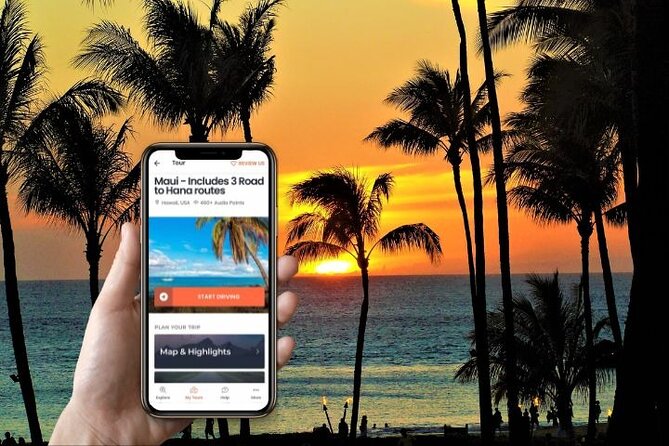
Reviewed · MAUI TOURS
Self-Guided Audio Driving Tour in Maui
Maui’s roads reward curiosity, but it is easy to miss a turnoff or drive past a place that deserved a stop. This GPS-triggered audio tour provides stories and directions as you go, so you can explore the Road to Hana, Haleakalā, and other parts of the island without keeping to a group’s schedule.
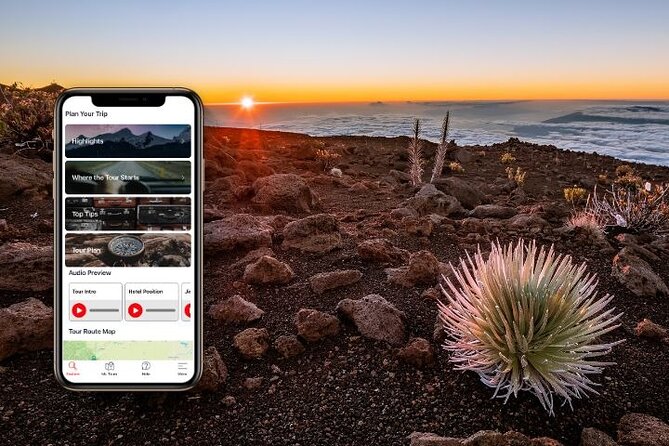
I like two things in particular: one purchase covers a carload of up to eight, and the tour never expires, so you can split it across days or save a route for another visit. The app also works offline once downloaded, a useful feature on stretches of Maui where cell service may not be available.
One caution: this is a flexible guide, not a driver or a park pass. You still need to plan your route, watch the road, and arrange required reservations and entry fees. With so many possible stops, trying to see everything in one day would turn a scenic drive into a checklist.
- Road to Hana guidance: Hear tips and stories along the route, with stops such as Twin Falls, Wai’anapanapa, and Ohe’o Gulch.
- Haleakalā at your pace: Learn about the summit and crater while choosing when to go. Sunrise visits require a reservation.
- Offline playback: Download the tour before setting out so the audio can work without cell service.
- Flexible routes: Use the suggested half-day, full-day, or multi-day plans, or build your own.
- One price per vehicle: The $29.99 purchase covers up to eight people, not eight separate tickets.
- Plan ahead for access: Wai’anapanapa requires a reservation, while National Park sites require an entrance fee or pass.
A car guide, not a tour bus

GuideAlong, formerly known as GyPSy Guide, is designed for people who want context on the road without handing over the day to a scheduled group. The narrator’s name is not provided, but the audio covers Hawaiian history and culture, points out places to stop, and gives driving tips as your location changes.
The app includes more than 465 audio points, trip planners in the app, online, and as a PDF, plus location-based commentary that plays automatically. You can start in different places and travel in either direction, with the GPS triggering relevant stories along the way.
That flexibility is the point. If a beach looks inviting, you can stop. If you are short on time, the commentary can help you prioritize a few roadside sights instead of feeling obliged to visit every marked place. The tradeoff is that you are still responsible for the practical decisions: where to park, whether conditions are safe, and which reservations or fees apply.
Choosing a route instead of chasing every stop
The experience is described as an 8-to-16-hour tour, but Maui’s stops span several different drives and parts of the island. The listed places are not a realistic one-day checklist. I’d use the trip planners to choose a route, then leave room for delays, meals, weather, and the occasional stop you did not expect to make.
The Road to Hana is the obvious choice for a full day, though the route can easily take longer if you stop often. Haleakalā and Makawao make a natural pairing for another day, while South Maui’s beaches and West Maui’s coast offer separate outings. The app’s lifetime access makes that kind of split practical: you can pause and resume on a different day rather than squeeze the island into one marathon.
The audio prompts play based on your location, and the tour can resume through My Tours after a pause. Before you leave, download the tour and check that it opens correctly. Bring a charging cable or car charger, too. One user found the phone heated up during long drives, so keeping the screen off when you do not need it may help.
More self-guided options in Maui:
- Haleakala Sunrise Best Self-Guided Bike Tour
★ 4.5 · 745 reviews - Best Haleakala Downhill Self-Guided Bike Tour with Maui Sunriders
★ 5.0 · 496 reviews - Haleakala Express Self-Guided Bike Tour with Bike Maui
★ 4.5 · 271 reviews
Taking the long way to Hana
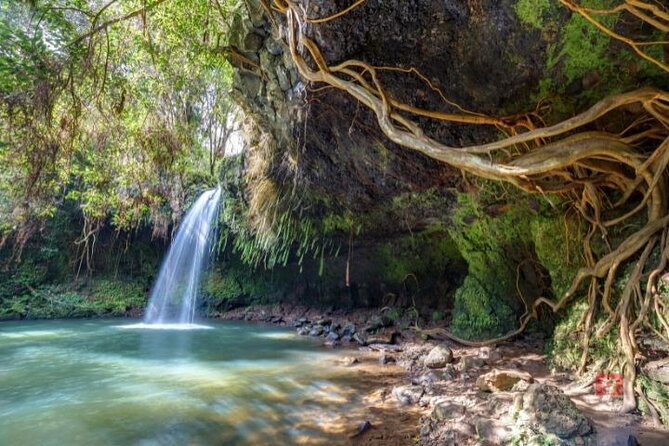
The Road to Hana is less about reaching Hana quickly than about the drive: winding roads, waterfalls, coastal views, and small places worth a break. The tour points out stops along the way, including Twin Falls, Upper Waikani Falls, Ke’anae Arboretum, and Wai’anapanapa State Park. Its historical and cultural commentary can give the scenery more meaning than a quick photo stop alone.
Twin Falls is often an early chance to stretch your legs. There are choices about how far to walk, and the trail can be muddy, so wear suitable footwear. The farmstand is noted as a place to pick up a tropical fruit smoothie, though stopping depends on your timing and what is open.
At Ke’anae Arboretum, the easy walk takes in tropical plants, including colorful rainbow eucalyptus, and continues toward old terraces used to grow taro. Nearby Ke’anae is also a place to pause and take in the coast. Upper Waikani Falls, also called Three Bears Falls, changes appearance with the water flow. Wailua Falls, between Hana and Ohe’o Gulch, is another photogenic roadside stop.
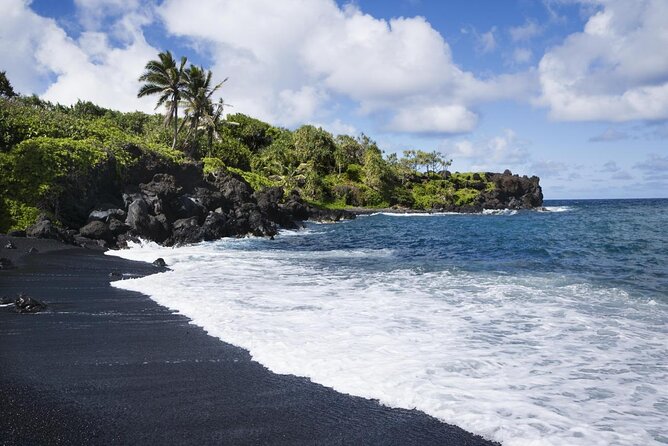
Wai’anapanapa State Park is a major reason to plan ahead. Its black sand beach, volcanic shoreline, sea arch, and blowhole make it a rewarding stop, but entry requires a reservation. The park is also tied to Hawaiian legend, so it is worth allowing time to explore rather than pulling over for only a quick look.
Beyond Hana, Ohe’o Gulch is part of Haleakalā National Park at sea level. The Seven Sacred Pools are a familiar name for the Ohe’o Pools, but swimming and wading depend on conditions and may not be permitted. Short walks lead to views of the rugged shore, and the Pipiwai Trail begins here.
The Pipiwai hike is a bigger commitment than a roadside wander. The full trail is about four miles, climbs roughly 650 feet, and can take two hours or more. You pass Makahiku Falls and bamboo forest on the way to Waimoku Falls; if the heat or climb gets tough, Makahiku Falls is a sensible turnaround point. The park advises reaching the trail by 2 p.m. to leave time for the hike and return drive.
Haleakalā’s high summit and Makawao
Haleakalā offers a sharp change from the coast. At the summit visitor center, you are around 9,700 feet above sea level, with views into the crater and its cinder cones. A short drive farther reaches Red Hill, at 10,023 feet, where the views extend in every direction.
Sunrise is popular and requires a reservation. At other times of day, no sunrise reservation is needed, but the National Park entrance fee still applies unless you have a valid pass. Kalahaku Overlook is another useful stop on the climb, with views into the eroded crater and outward across Maui.
The audio is useful here because the road itself is part of the experience. Commentary about the volcano and its changing forms gives you something to listen for at each viewpoint, while the freedom to linger means you do not have to keep pace with a group. Allow time for the drive and stops rather than treating the summit as a quick detour.
After Haleakalā, Makawao offers a different kind of stop. This small town is associated with paniolos, Hawaii’s cowboys, and has galleries and places to eat. Kepaniwai Park and Heritage Gardens, near Iao Valley, celebrates the cultures that contributed to modern Maui. At Iao Valley State Monument, the photogenic Iao Needle rises in a steep, often rainy valley. The monument requires an entrance fee, and a short visit may be enough unless you want to linger.
Beaches, lava, and Maui’s other coastal roads
The tour covers far more than Hana and Haleakalā. South Maui’s Kihei is known for its long beaches, beach parks, dining, and sunset views. Kamaole Beach Park I has facilities and lifeguards, making it a practical stop for a swim or picnic. Wailea Beach offers a scenic coastal walk, while Makena’s Big Beach has a broad sandy shore and lifeguard service. Its shore break can be rough, so take care getting in and out of the water.
La Perouse Bay is for those who want to continue to the end of the road. The coast is rocky and exposed to the sun, and the lava fields are best explored with good footwear. Snorkeling here calls for extra caution because the area is isolated. The tour’s tips can help you understand what you are approaching, but they cannot replace checking conditions and using your judgment.
On the west side, Honolua Bay is known for snorkeling and diving when the ocean is calm; its shoreline is rocky in places. In December, surfers gather for the Billabong Pro, which can be watched from the cliffs. Papawai Scenic Lookout is a good seasonal stop from November through April, when humpback whales winter in Maui’s waters.
Other west-side possibilities include Lahaina, Kaanapali Beach, and Nakalele Blowhole. Lahaina’s past as an early Hawaiian capital and port is reflected in its heritage sites and waterfront. Kaanapali has a long sandy beach, boardwalks, facilities, and a nightly cliff-diving ceremony at Black Rock. At Nakalele, a short trail leads down toward the blowhole, but keep a safe distance from the opening and waves; you can also view it from the parking area.
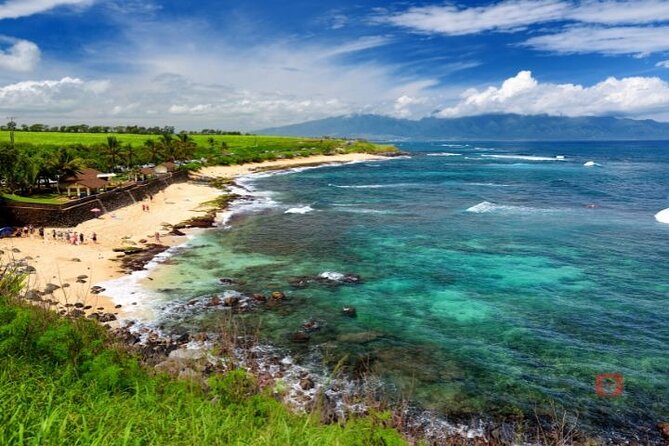
Ho’okipa is a better place to watch windsurfers than to swim, given its strong winds and currents. Turtles are sometimes seen resting at the far right of the beach. Keep your distance and never touch them. Hamoa Beach, by contrast, is a crescent of sand that can be a pleasant break on the Hana drive, though there are no lifeguards.
More audio-guided walks in Maui:
- Shaka Guide Maui “Classic” Road to Hana Audio Driving Tour
★ 4.5 · 210 reviews - Ultimate Self-Driving Audio Tour of Road to Hana, Maui
★ 4.5 · 145 reviews - Self-Guided Audio Driving Tour in Road To Hana
★ 4.5 · 87 reviews - Maui Adventure Bundle: 6 Epic Audio Driving Tours, Including Road to Hana
★ 4.5 · 81 reviews
What $29.99 buys you
At $29.99 for up to eight people, the price is easiest to justify when you are sharing a rental car. It costs less than a separate audio purchase for each person, and you can use it across multiple days or visits. The lifetime access and free updates also make it less of a use-it-today-or-lose-it purchase.
The real value is not just the narration. It is the combination of directions, local tips, history, and prompts that can help you notice sights you might otherwise pass. Several users found it useful for prioritizing stops on the Hana drive when time was limited. The audio can also give the driver and passengers a common plan without requiring everyone to study maps between stops.
There are limits. The tour is offered in English only, and you must supply your own phone, data or Wi-Fi for the initial download, and a way to play the audio in the car. Park fees and reservations are extra. The app does not replace navigation or road-safety judgment, so it is sensible to test the sound before departure and avoid handling your phone while driving.
Who should book this Maui audio tour?
This is a strong fit if you are renting a car, prefer independent sightseeing, and want more context than a navigation app provides. It especially suits couples and families who can share the cost, as well as anyone who would rather stop when it suits them than follow a fixed group schedule.
It is less suitable if you want a driver, a live guide, or a fully arranged day with transport and admission included. You will need to handle your own route planning, entrance fees, and reservations. If that sounds manageable, the flexibility and offline playback make this a practical companion for Maui’s long drives.
I would book it if I planned to explore more than one part of the island, or if the Road to Hana were on my list. Start by choosing one route, download the audio before leaving Wi-Fi, and check reservation requirements for the places you want to visit. The best use of the guide is not to see every stop. It is to make a few good stops with enough time to enjoy them.
FAQ
How much does the tour cost?
It costs $29.99 per group, for up to eight people in one vehicle.
How long does the tour take?
The approximate duration is 8 to 16 hours. The time you need depends on your route and how many stops you make, and the stops cover several different parts of Maui.
Does the audio tour work without cell service?
Yes. Download the tour in the GuideAlong app before setting out, and the audio works offline.
Do I need to start at a particular place?
No. You can start and end in Maui wherever you choose. The GPS-based commentary plays according to your location and direction.
Are park fees and reservations included?
No. National Park passes and timed-entry reservations are not included. Haleakalā sunrise visits require a reservation, and Wai’anapanapa State Park requires a reservation for entry.
Does the tour expire?
No. It is a one-time purchase with no expiry, and it includes free updates.
What should I bring for the tour?
Bring a fully charged phone and a USB or USB-C car charger for charging and sound connectivity. Download the tour over Wi-Fi or cellular data before you set out.
Just added around Maui
- Fun Mountain Bike riding on trails in Maui Hawaii!★ 5.0 · 11 reviews
- Maui’s Only Clear Bottom Kayak Rental (priced per tandem kayak)★ 4.0 · 12 reviews
- 3-Tank Dive Featuring the Molokini Crater★ 5.0 · 5 reviews
- “Origins” Multicultural Dance Spectacular★ 5.0 · 23 reviews
- Mermaid and Merman Photoshoots on Maui★ 5.0 · 4 reviews
- Maui Jewelry Making Class with Puka Shells and Pearls★ 5.0 · 7 reviews
- Instant Island Moments: photos and video same day delivery★ 5.0 · 9 reviews
- Famous Road to Hana Waterfalls, Black Sand Beach & Lunch★ 5.0 · 32 reviews
Maui Tours, compared.


Maui Eco-Raft Tour: Eye-Level Whale or Dolphin Watching – Lahaina
Read our review →
Maui Snorkeling Adventure to Molokini and Turtle Town
Read our review →
Haleakala Sunrise Spectacular with Local Breakfast
Read our review →
Maui Snorkeling Adventure From Ma’alaea Harbor to Molokini
Read our review →


Browse the lists this tour appears in